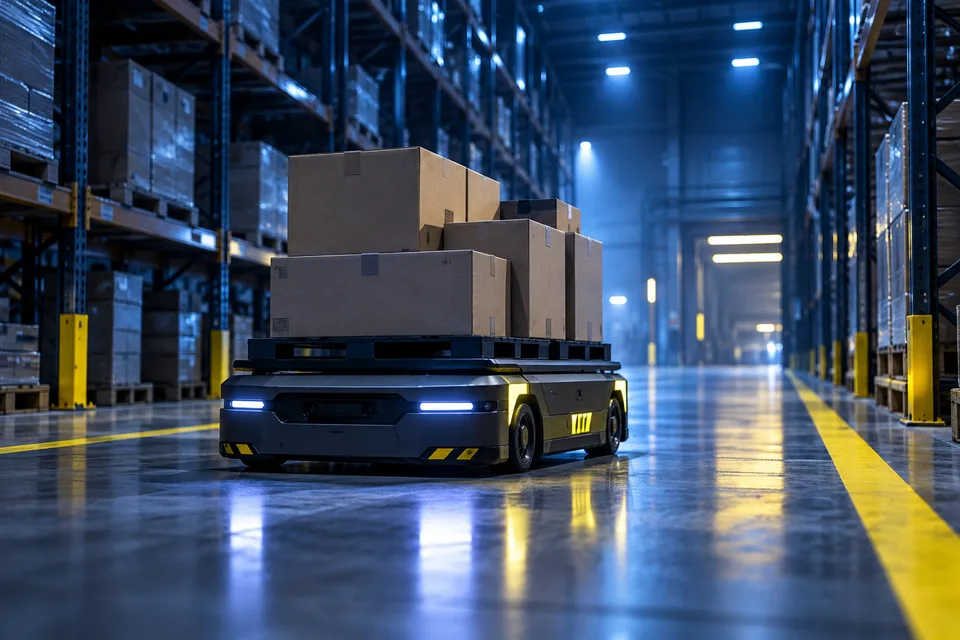
In April 2015, UC San Francisco described a fleet of 25 delivery robots working at its new Mission Bay medical center. Different machines carried medicines, meals, waste, surgical instruments and laboratory specimens. They waited for lifts and could notify a nurse that a delivery was ready. Medication access required a clinician’s code and fingerprint. The account is now archived: it documents the hospital’s 2015 arrangement, not the fleet’s present condition.
Those details are more revealing than a robot’s resemblance to a person. Waiting for a lift connects a machine to shared building capacity. Notifying a nurse connects arrival to somebody else’s work. Restricting a compartment connects transport to authority over its contents. Navigation is one part of a delivery service; the other parts remain necessary even when the wheels move themselves.
UCSF’s account presented benefits anticipated or described by its own leaders. It did not provide a controlled comparison of total labor cost, downtime or long-term return on investment. It is useful evidence of a deployed arrangement, with those limits. A hospital announcement cannot answer every purchasing question for a different building.
Follow that distinction through a generic supply route: store room, corridor, door, lift, receiving point and charger. The operating questions below are analysis, not observations of UCSF’s current service or a report of a new site visit. The comparison is with the complete job, including the people who load, receive and maintain it.
At the store room
The route begins with a handover. Someone must put the correct items into a compatible load arrangement and tell the system where they should go. If that takes more attention than the movement previously required, the apparent labor saving can shrink. The robot’s travel performance and the whole delivery process need separate observation.
Load variation matters. A container that fits during a demonstration may not represent the sizes, weights or handling requirements encountered later. A deployment plan should identify the intended range and the cases that remain outside it. A linen trolley and a locked medication compartment may share the corridor while requiring different handling and access. Compatibility with the route does not make their handovers interchangeable.
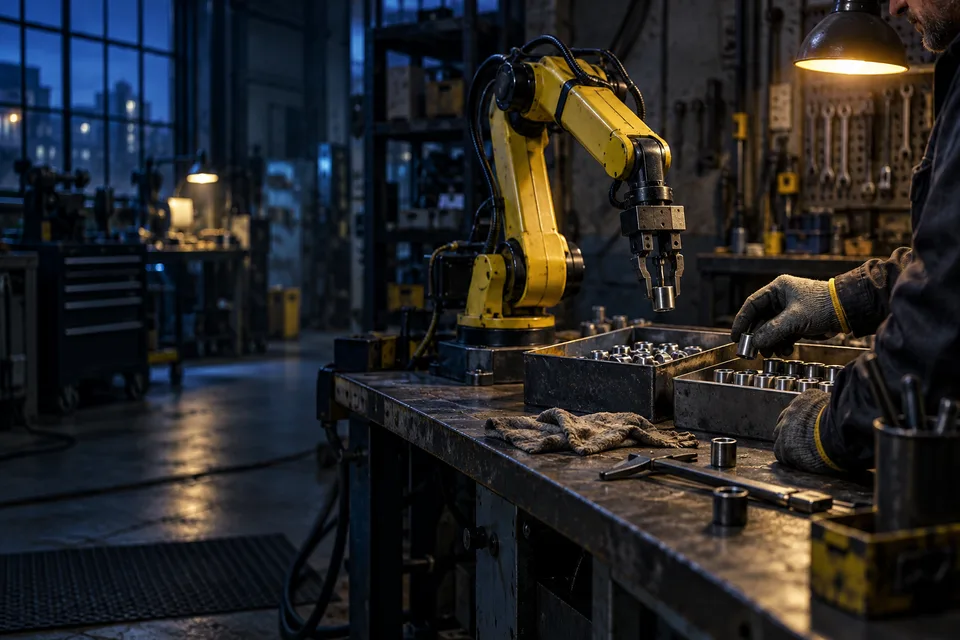
For this delivery job, the relevant form follows the load and the route. Wheels may be appropriate where floors and access permit them. A manipulation system might be necessary for a different handover. Selecting a humanoid because people currently do the work, or rejecting one because a cart looks simpler, skips the same question: what capabilities does the actual task require?
The storage team also needs to know when a delivery request has been accepted. A request sitting in an application queue is different from a load physically collected. Clear status prevents duplicate requests and helps people decide whether to wait or use the fallback process. An animated map is not a substitute for an understandable account of the job.
Through the corridor
A corridor is not a static line on a floor plan. Doors, temporary objects and people change its usable space. A robot might stop correctly when a route is obstructed and still fail to deliver the supplies on time. Safety and productivity can therefore point to different evaluations of the same stop. It is important to preserve both rather than calling the stop simply good or bad.
NIST’s mobility-performance research identifies issues such as uneven flooring, dynamic obstacles, slippage and changing loads as relevant to measurement. Its work emphasizes reference measurements and test methods for intelligent mobility systems. A vendor’s navigation demonstration should be read against the conditions it actually includes, not assumed to cover every issue in a working building.
Testing the intended route should include its meaningful variations. A quiet corridor at one time may tell little about a busy transition period. A freshly arranged floor may not reveal how the system handles ordinary temporary changes. The objective is not to create an impossible obstacle course; it is to examine the conditions the operator plans to promise a service within.
There is a human arrangement around the stop. Can people understand that the robot is waiting? Do they know whether to pass it or seek help? Are staff expected to clear the route, and is that expectation reasonable? An automation plan that depends on everyone silently learning new habits may transfer work to people whose contribution never appears in the robot’s performance report.
The route can sometimes be improved instead of demanding a more complex machine. A clearer staging area or a change to a regularly obstructed location might benefit both people and robots. Such changes have costs and constraints, but they belong among the alternatives. The useful system may consist of a modest robot and a well-designed route rather than the most adaptable robot available.
At the door and the lift
Passing between controlled spaces introduces dependencies beyond navigation. Doors and lifts may require approved integrations, reliable communications and arrangements for failures. A robot capable of traveling freely on one floor does not automatically supply a dependable multi-floor delivery service. The connection between subsystems needs its own owner and acceptance criteria.
An instruction interface can help coordinate different machines without solving every physical or organizational dependency. VDA’s April 2026 announcement of VDA 5050 version 3.0 describes an expanded communication interface supporting mobile robots with different levels of autonomy, including zone concepts and planned-path sharing. Its scope concerns communication between mobile robots and a master controller, not a promise that arbitrary equipment will work together without integration.
For a building operator, the question is which exact combinations have been implemented and tested. Two products referring to the same interface do not necessarily provide every optional behavior required by the job. Version, supported features and responsibility for the connection should be established before mixed-fleet compatibility becomes a contractual assumption.
Failures need a practical resolution path. If the robot waits for a lift response that never arrives, who notices and who can act? If the building’s control system is undergoing maintenance, how is robot work suspended? These are ordinary coordination questions, but they determine whether the deployment can operate beyond the engineering team that introduced it.
Where the load is needed
A delivery ends when the next stage of work can proceed, not necessarily when the robot reaches a coordinate. The recipient needs the correct load, an appropriate place to receive it and a clear signal that it has arrived. A machine can navigate flawlessly while the supplies remain inaccessible in a locked compartment or an inconvenient staging location.
This makes arrival precision and handover time relevant in different ways. A system might reach a station consistently but require someone to leave another task to unload it immediately. Whether that is acceptable depends on the intended service. The test should include the receiving process instead of stopping the clock at the most flattering point.
Exceptions should be deliberately limited and understandable. A damaged container, a changed destination or a recipient who cannot accept the load may require human action. The robot does not need to improvise a solution to every unusual situation. It does need to leave the job in a known state and make the unresolved part visible to the responsible person.
The same principle applies to records. Collected, delivered and accepted are different statuses. A useful operational log can distinguish them without recording unnecessary information about everyone passing through the corridor. More telemetry is not automatically more useful evidence; the record should answer the questions needed to operate and improve the service.
Back at the charging point
Energy planning includes the work the robot is expected to perform, the opportunities to charge and the consequences of a charging failure. A maximum operating-time specification is not a guarantee under every load and route. The operator needs assumptions appropriate to the intended schedule and a visible way to identify when the actual conditions differ.
Maintenance also turns a machine into a continuing service. Consumables, cleaning, inspections, software support and access to competent repair can affect availability. A purchase price describes only part of that commitment. The relevant commercial comparison includes the support model and the work that remains with the customer, not merely the size of the discount on the initial unit.
Updates create a particularly important handover between vendor and operator. A navigation or fleet-management change may improve performance while altering familiar behavior. The organization should know how changes are introduced, what is tested and how an unsuitable change can be addressed. Permanent software novelty is a poor operating model for a building that needs a predictable service.
There is also a dependency on the people who know the system best. A deployment that works only while its original integrator is on site has not yet demonstrated an ordinary operating arrangement. Training, usable documentation and an escalation route make it possible for the service to survive a shift change or a person’s departure.
What the purchase should be judged against
Count completed useful deliveries, the time and attention required around them, exceptions and relevant service interruptions. Keep the scope clear: a trial on one route with one load type supports a claim about that trial. Scaling to additional buildings, loads or hours requires evidence about the new conditions, even when the same model of robot is used.
Compare the alternative honestly. The existing process may involve avoidable travel, but it may also allow a person to notice another need on the way. A robot may provide useful consistency without reproducing that flexibility. The organization should decide which capabilities matter instead of counting only the part of human work that resembles a transport diagram.
Make the fallback visible before the trial starts. If the machine is unavailable, which deliveries still need to happen and who performs them? A fallback that depends on spare staff who are never actually present is an assumption, not a service arrangement. The trial should exercise the transition as well as the normal route. That can reveal whether a temporary interruption creates a manageable delay or leaves people uncertain about supplies already loaded, requests still waiting and deliveries that may have completed without confirmation.
Include the return to normal operation in that exercise; recovery is another part of the delivery service.
A human-shaped machine could ultimately be valuable where environments and tasks demand its particular capabilities. The argument here does not depend on predicting that outcome. It is that the value of robotics cannot be inferred from resemblance to a person, or from the dramatic appeal of a demonstration. A well-matched specialized machine can be consequential without looking revolutionary.
A robot waiting outside a lift can be working exactly as designed while an urgent delivery waits too. The purchaser needs to know which promise is being made: safe movement, arrival at a station or supplies available to the person who needs them. The trial should end at the same point as the promise.
Sources & context
This article draws on the sources linked in the text. Analysis and illustrative scenarios are identified separately from reported findings.
- UC San Francisco described a fleet of 25 delivery robots
- mobility-performance research
- April 2026 announcement of VDA 5050 version 3.0